Introduction: Why Time Tracking Has Become a Strategic Issue
Remote and hybrid work are cementing their place in the future of work. According to Investopedia, in 2023, 35% of full-time employees worked remotely at least part of the time, up from 34% the previous year - evidence the shift is not reverting back to pre-pandemic norms. That number rises to 52% for college-educated employees over 25.
Regarding preferences, Forbes Advisor reports a staggering 98% of workers want the option to work remotely at least some of the time, showing flexibility is now expected, not rewarded (Forbes).
But flexibility comes with questions every business leader has asked at some point:
Are my teams productive when working remotely?
How do I measure work without falling into micromanagement?
Can I ensure fairness and trust across global, distributed teams?
The answers depend on how well you can manage time - not in the traditional sense of tracking “hours worked” but in understanding the quality of those hours. That’s where smart time tracking becomes a decisive factor.
Unlike old-fashioned timesheets or software that only records when someone logs in and logs out, smart time tracking captures active time, idle time, and productive time. This distinction is what makes or breaks remote workforce management. Without it, businesses risk falling into the trap of blind spots, inaccurate reporting, and employee dissatisfaction.
At Metricoid Technology Solutions, we’ve worked with companies transitioning into hybrid and fully remote models, and a recurring theme is always the same: systems succeed or fail not because of features, but because of how well they handle data migration, tracking, and ongoing management. Our solution, MTrackPro, was designed to address this challenge head-on, and in this guide we’ll explore why it matters more than ever.
The Hidden Struggles of Remote Time Management
The promise of remote work is efficiency and autonomy. The reality, however, often looks different. Teams are scattered, workflows depend on asynchronous communication, and not every hour logged reflects equal contribution.
Managers frequently complain that they can’t see where bottlenecks happen. Employees, on the other hand, often feel pressured to “show they are online” rather than focus on meaningful output. This misalignment creates several challenges:
Productivity is mismeasured. Logging eight hours in front of a screen is not the same as delivering eight hours of value.
Idle time is misunderstood. Breaks, thinking time, or waiting for approvals get lumped into “unproductive” categories, even when they’re natural parts of workflows.
Burnout goes unnoticed. A Microsoft study showed the average workday has increased by 13% since 2020, especially in knowledge-driven industries. Without the right systems, leaders only see “output,” not the rising effort behind it.
Compliance gets harder. In industries with strict labor regulations, relying on outdated methods risks both client trust and legal penalties.
These struggles point to a simple truth: the problem isn’t remote work itself—it’s the lack of visibility and insight into how work happens.
Why Smart Time Tracking Matters More Than Features
When organizations shop for new systems, they often get distracted by flashy features. Yet, as any IT leader will confirm, features mean little if the foundation of data management is weak. The same applies to workforce tools.
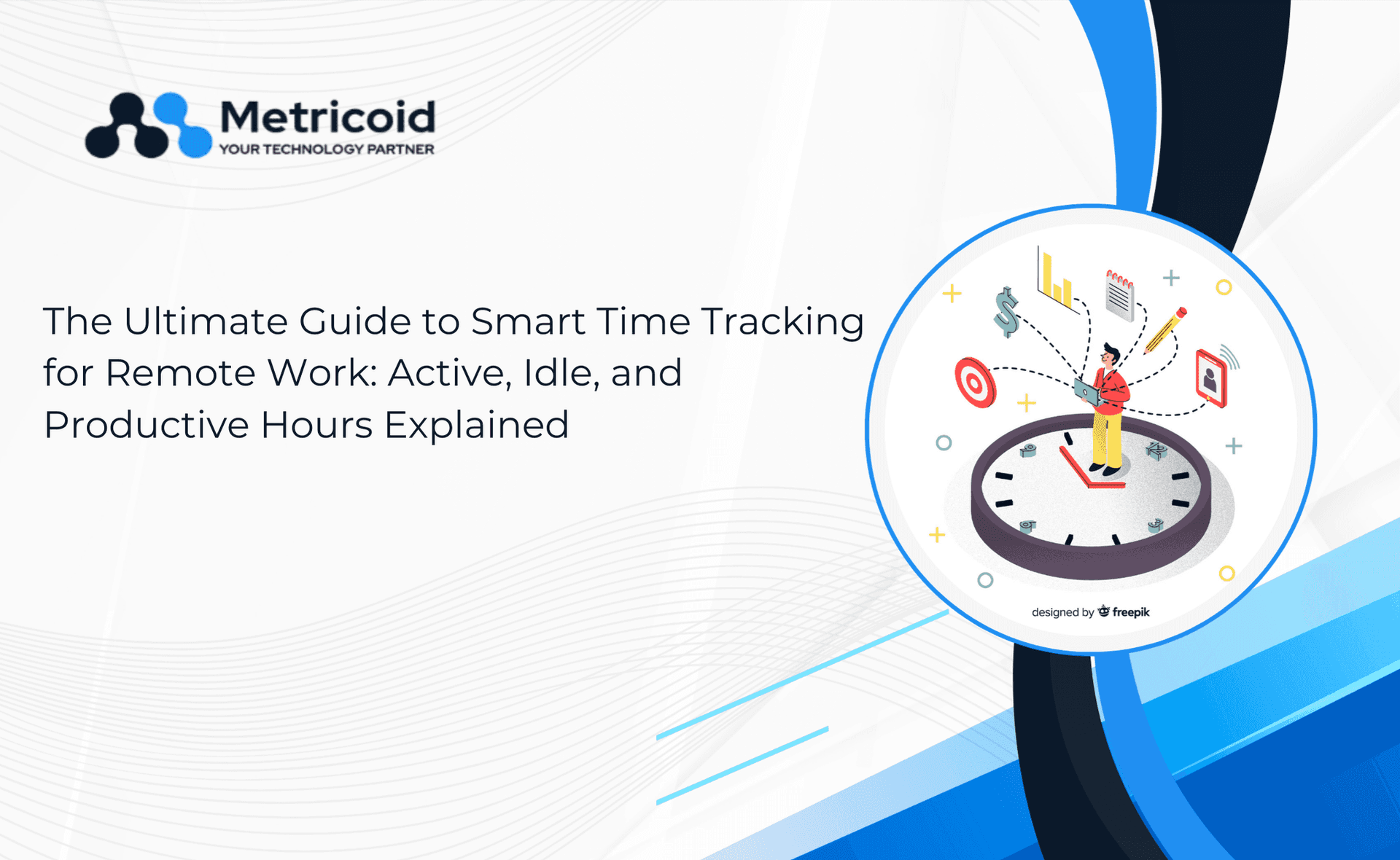
Smart time tracking provides a lens that goes deeper than “time spent.” It distinguishes between:
- Active hours: the periods when employees are directly engaging with work tools, writing, coding, designing, or collaborating.
- Idle hours: time when no keyboard or mouse input is detected. This could be breaks, waiting for files, or simply a pause between tasks.
- Productive hours: the time actively spent on approved, role-relevant applications or platforms.
This nuanced approach helps organizations in three critical ways:
-
It replaces assumptions with data. Instead of guessing whether teams are working efficiently, leaders see exact patterns.
-
It balances accountability with autonomy. Employees get clear visibility into their own habits, turning tracking into a tool for self-management rather than surveillance.
-
It builds trust. Transparency transforms monitoring into a shared framework where both sides—management and employees—work with the same set of facts.
The difference is subtle but powerful. While traditional tools create suspicion (“Are they watching me?”), smart time tracking builds alignment (“We’re all looking at the same performance indicators”).
Real-World Scenarios: What Smart Tracking Reveals
Let’s look at how this plays out in real roles across a company.
A developer working remotely might spend only four hours actively coding, but those hours produce high-value output. Without smart tracking, it may look like “half a day’s work.” With active/productive tracking, it’s recognized as a full day of deep contribution.
A customer support agent may appear “idle” when waiting for tickets to come in. Traditional tools might flag this as disengagement. Smart tracking contextualizes idle time and pairs it with productive resolution data to give a complete view of performance.
A designer often needs long stretches of focus that don’t always involve constant clicks or keystrokes. Smart systems distinguish creative idle periods from disengagement, protecting employees from unfair evaluations.
These examples show why nuance matters. Remote work isn’t factory-line labor, and smart tracking respects the differences in how value is created across knowledge roles.
Why Companies Fail Without Smart Time Tracking
Many companies introduce remote-friendly systems but overlook time and data management. The result? Adoption fails, employees resist, and leadership grows frustrated. The root causes are often the same:
-
Poor visibility into workflows leads to micromanagement.
-
Inaccurate reporting damages trust between teams.
-
Unclear performance metrics leave employees uncertain about expectations.
-
Compliance risks increase when audits or clients demand accountability.
This is why time tracking isn’t just another “feature.” It’s the backbone that holds workforce management together. Without it, even the most sophisticated systems crumble under real-world pressure.
How MTrackPro Solves the Challenge
At Metricoid, we built MTrackPro to address exactly these issues. It’s not about adding another layer of control - it’s about creating a transparent, adaptive system that serves both leadership and employees.
Here’s how it delivers:
-
Automated smart tracking means no manual timesheets. Active, idle, and productive hours are logged seamlessly in the background.
-
**Customizable productivity **categories allow organizations to define what “productive” means for different roles. A developer’s benchmarks differ from a marketer’s, and MTrackPro reflects that.
-
Real-time analytics dashboards give managers the data they need without invasive oversight. Instead of guessing, they see trends that guide better decisions.
-
**Seamless integrations **with platforms like JIRA, Trello, and ClickUp make adoption painless. MTrackPro fits into existing workflows rather than disrupting them.
-
Flexible deployment options—cloud, on-premise, or white-label—ensure businesses get the control and scalability they need.
-
Enterprise-grade security guarantees compliance and data protection, a necessity in industries where confidentiality is non-negotiable.
-
Employee empowerment tools give individuals access to their own reports, turning tracking into a resource for growth, not punishment.
Together, these capabilities ensure companies don’t just monitor time but actually optimize it.
The Bigger Picture: Building Smarter, Stronger Teams
Time tracking, when done wrong, damages culture. When done right, it transforms it. The difference lies in approach.
Smart tracking creates a shared truth that aligns employers and employees. Leaders gain visibility without resorting to micromanagement. Teams gain clarity on how they spend their time, avoiding burnout while highlighting contributions. Compliance becomes easier, data management becomes reliable, and scaling the business doesn’t require losing oversight.
This is why at Metricoid, we often say: system adoption doesn’t succeed because of features; it succeeds because of how well it manages data and time.
Conclusion: Smarter Time, Smarter Work
The remote revolution isn’t slowing down. If anything, the workforce of the future will be more distributed, more flexible, and more reliant on systems that balance autonomy with accountability.
Organizations that rely on outdated or simplistic tracking methods will continue to struggle—with misaligned metrics, compliance risks, and employee distrust. Those that embrace smart time tracking will unlock not just efficiency but trust, fairness, and sustainable productivity.
The future of work isn’t about clocking in or clocking out - it’s about working smarter, not just longer. And smart time tracking is how we get there.
Ready to make the shift? Discover MTrackPro today and see how your teams can thrive with smarter, data-driven time management.